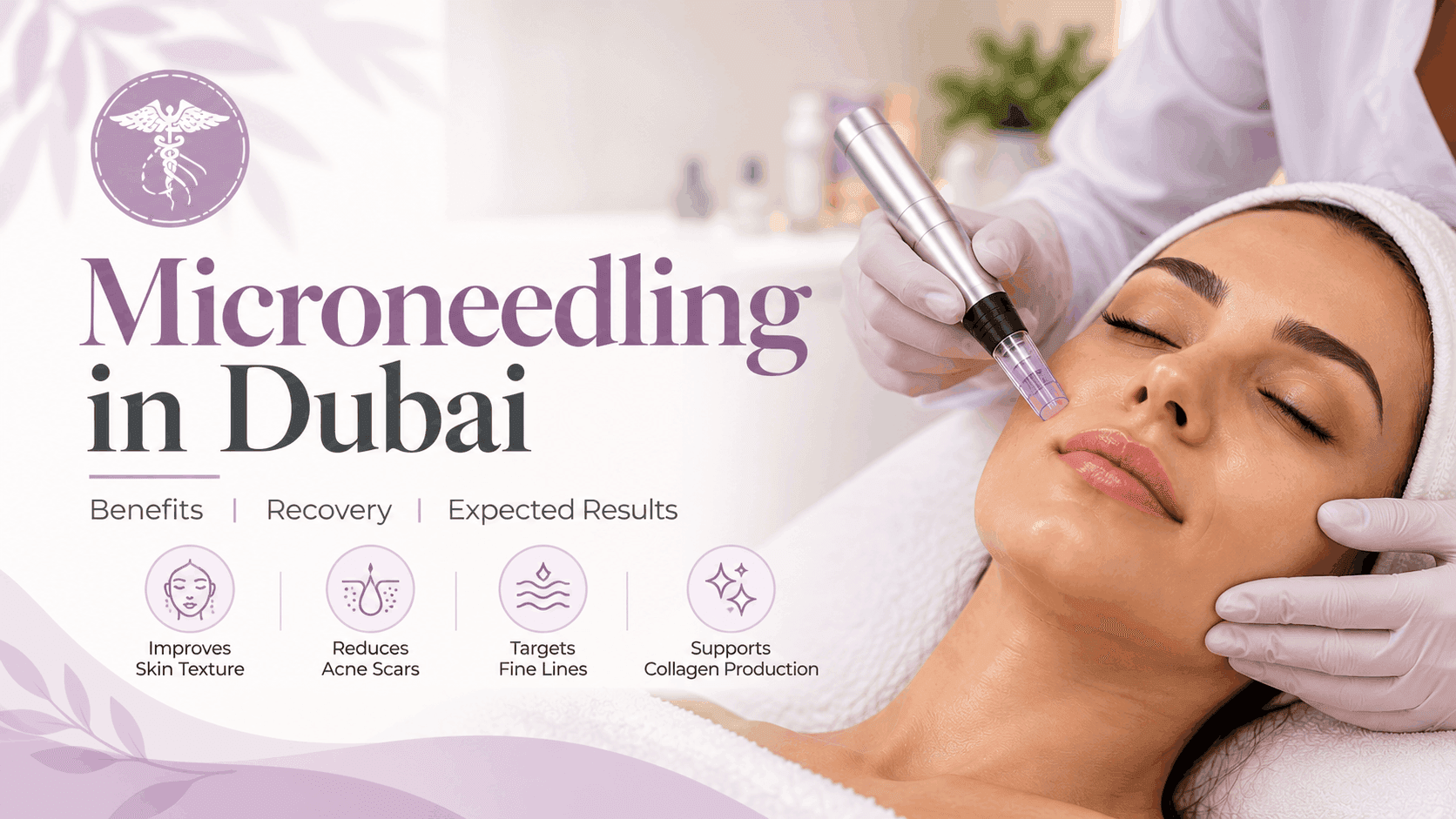
Microneedling has become a popular option for people looking to improve uneven skin texture, the appearance of acne scars, enlarged pores and fine lines without undergoing surgery. By creating controlled micro-injuries in the skin, the treatment stimulates the body's natural wound-healing response and supports collagen production.
If you are researching microneedling in Dubai, understanding how the procedure works, who may benefit from it and what recovery involves can help you make an informed decision.
Results depend on your skin condition, the treatment technique, the depth of needling and the number of sessions recommended. Microneedling is not suitable for every skin concern, and a professional assessment is important before treatment.
At Visage Polyclinic Dubai, patients can discuss their skin goals and explore whether microneedling may be an appropriate option within an individualized skin-rejuvenation plan.
Microneedling is a minimally invasive cosmetic procedure that uses a device containing fine needles to create controlled punctures in the skin. These tiny channels activate the skin's natural repair process, which can stimulate collagen and elastin production over time.
Collagen helps support the skin's structure, while elastin contributes to its flexibility. As the skin repairs itself, some people may notice improvements in texture, firmness and the appearance of certain scars.
Microneedling is also known as skin needling or collagen induction therapy.
The procedure can be performed on selected areas of the face and body. The technique and needle depth depend on the treatment area, the condition being addressed and the patient's skin characteristics.
Microneedling should be performed using appropriate equipment, sterile techniques and suitable infection-control procedures by a qualified professional.
Microneedling is commonly considered for several skin concerns. However, the degree of improvement varies, and some conditions require alternative or combined treatments.
Microneedling for acne scars may help improve the appearance of certain depressed or atrophic scars by stimulating collagen remodelling.
It is generally more relevant to selected shallow or rolling scars than to every type of acne scar. Deep ice-pick scars, tethered scars and raised scars may require different approaches.
Active acne should be assessed before treatment. Needling over inflamed acne lesions can worsen irritation and may increase the risk of complications.
For more information about treatment options, read our guide to acne scar treatment in Dubai.
Rough skin texture can be associated with previous acne, sun damage, ageing and other skin changes.
By encouraging collagen remodelling, microneedling may help the skin appear smoother over a series of treatments. The extent of improvement depends on the underlying cause and severity of the concern.
Collagen production naturally changes with age. Microneedling may help improve the appearance of some fine lines and mild textural changes.
It does not replace a facelift, remove all wrinkles or guarantee a particular degree of skin tightening. A clinician can help determine whether microneedling is suitable for your goals.
Microneedling may improve the overall appearance of skin texture, which can make pores look less prominent in some individuals.
However, it does not permanently close or eliminate pores. Oil production, genetics and skin structure also influence pore visibility.
Some patients consider microneedling to address uneven texture and the appearance of superficial skin irregularities.
Pigmentation concerns require particular care. Not every type of dark spot responds to microneedling, and inflammation can sometimes worsen pigmentation, especially in skin prone to post-inflammatory hyperpigmentation.
A consultation can help establish whether microneedling or another treatment is more appropriate.
The potential benefits of microneedling depend on the indication and the individual's response to treatment.
The controlled micro-injuries stimulate a wound-healing response that can encourage collagen remodelling. This process develops gradually rather than immediately after the procedure.
For suitable types of atrophic acne scars, microneedling may gradually improve skin texture and make scars less noticeable. Complete scar removal should not be expected.
Some patients notice a smoother skin surface and more even texture after completing a recommended course of treatments.
Microneedling does not involve surgical incisions. It generally has less downtime than many more invasive procedures, although temporary redness, swelling and sensitivity are common.
Needle depth, treatment area and session frequency can be adjusted by a qualified professional according to the patient's skin and treatment goals.
This individualized approach is important because a treatment designed for acne scars may differ from one intended to address mild textural changes.
A typical microneedling appointment involves several stages.
The clinician reviews your skin concerns, medical history, medications, previous cosmetic procedures and tendency to develop pigmentation or scars.
They may examine the type of acne scarring, the presence of active acne and whether other treatments are more suitable.
The treatment area is cleansed. A topical numbing product may be used when appropriate to improve comfort.
The clinician should explain any preparation instructions, including whether specific skincare products need to be paused.
A suitable device is moved across the selected treatment area to create controlled micro-injuries.
You may experience pressure, prickling or mild discomfort. Sensation varies depending on the area treated, device, technique and individual sensitivity.
The procedure's duration depends on the size of the treatment area and the treatment plan.
After treatment, the skin may look red and feel warm, tight or sensitive. The clinician will provide instructions on cleansing, moisturising, sun protection and when to restart active skincare products.
Follow these instructions carefully to support healing and reduce the risk of irritation or infection.
Understanding recovery is important when planning microneedling treatment in Dubai, especially if you have work, social events or outdoor activities scheduled.
The skin may appear red, similar to mild sunburn. Some people experience swelling, tenderness or a dry, tight sensation.
The intensity of these effects depends on the treatment depth, technique and individual skin response.
Redness and sensitivity usually begin to settle, although recovery varies. Some people experience dryness or mild flaking as the skin heals.
Avoid scrubbing, picking or exfoliating the treated area.
Many patients find that the visible irritation has substantially improved within several days. Deeper or more intensive treatments can require longer recovery.
The skin's collagen-remodelling process continues after the initial redness has resolved, so visible improvement may take weeks or months.
Important: There is no single recovery timeline for everyone. Follow the specific aftercare instructions provided by your treating professional.
Appropriate aftercare helps protect the skin while its natural barrier recovers.
Do not apply makeup or use skincare products immediately after treatment unless your clinician confirms they are appropriate.
If you develop worsening pain, spreading redness, pus, blistering, fever or other signs of infection, seek prompt medical advice.
The number of sessions depends on your skin condition and the results you want to achieve.
Some people undergo a series of treatments rather than relying on a single appointment. Acne scars may require several sessions, while mild texture concerns may have different treatment requirements.
Sessions are usually spaced apart to allow the skin to recover and begin remodelling. The appropriate interval should be determined by your clinician based on the technique used, treatment depth and healing response.
More aggressive treatment is not automatically better. Excessive needling or insufficient recovery time can increase the risk of complications.
During your consultation, ask for an individualized plan that explains the expected number of sessions, treatment intervals and realistic improvements.
Microneedling results develop gradually.
Some patients notice an early improvement in skin texture after the initial redness settles. However, meaningful collagen-related changes take longer because the skin needs time to repair and remodel.
For acne scars and deeper textural concerns, improvements may become more apparent over several weeks or after a series of treatments.
Results vary according to:
Microneedling can improve the appearance of selected skin concerns, but it cannot guarantee flawless skin or completely eliminate acne scars.
Microneedling may be appropriate for various skin tones, but it is not risk-free and should not automatically be considered suitable for everyone.
Potential side effects include redness, swelling, discomfort, bruising, dryness and temporary irritation. Less common complications can include infection, scarring and changes in pigmentation.
Extra caution may be needed for people with active skin infections, inflamed acne, a history of abnormal scarring, impaired wound healing or certain medical conditions. People with a history of cold sores should disclose this before facial treatment.
If you are prone to pigmentation, the clinician should assess whether microneedling could trigger post-inflammatory hyperpigmentation and discuss alternative options where appropriate.
Do not undergo treatment over active infection or irritated skin without medical assessment. At-home needling devices also carry risks if used incorrectly or without adequate hygiene.
A qualified professional should assess your suitability, explain the risks and use appropriate equipment and infection-control procedures.
Microneedling and chemical peels are different treatments, and neither is universally better.
Microneedling uses controlled micro-injuries to stimulate repair and collagen remodelling, helping improve selected acne scars and uneven texture. Recovery involves redness and sensitivity, depending on treatment depth. Chemical peels use a chemical solution to exfoliate selected skin layers, addressing selected concerns involving acne, superficial pigmentation and skin texture. Recovery may involve peeling, redness or irritation, depending on peel type and depth. Suitability for either treatment depends on scars, skin condition, healing risk, skin type, pigmentation concerns and peel formulation. For more details, read our guide to chemical peels in Dubai.
Your clinician may recommend one treatment or a carefully planned combination, depending on your skin condition and medical history.
The cost of microneedling in Dubai varies between clinics and treatment plans. Factors that may affect the price include:
There is no single price that applies to every patient. Request a clear quotation that explains what each session includes and whether follow-up appointments or additional procedures are charged separately.
The cheapest option is not necessarily the most appropriate. Professional qualifications, hygiene, equipment and individualized treatment planning should also influence your decision.
Choosing a clinic for microneedling involves more than comparing treatment prices. The provider should understand your skin concerns, assess your suitability and explain what the procedure can realistically achieve.
At Visage Polyclinic Dubai, you can discuss your goals and explore suitable options within a personalized skin-care plan.
Before proceeding, ask about the professional performing the treatment, the equipment used, expected recovery, possible side effects and the number of sessions that may be appropriate for your skin.
You can also explore the clinic's skin rejuvenation treatments in Dubai to learn more about available options.
If you want to improve uneven skin texture, address selected acne scars or explore options for skin rejuvenation, microneedling may be worth discussing with a qualified professional.
The best approach starts with an assessment of your skin, realistic expectations and a clear explanation of benefits, risks, recovery and likely treatment requirements.
Contact Visage Polyclinic Dubai to discuss your skin concerns and find out whether microneedling is appropriate for your needs.
Microneedling is used to improve selected skin concerns, including some acne scars, uneven texture and fine lines. Suitability depends on the condition being treated and the individual's skin.
It may improve the appearance of certain depressed acne scars by stimulating collagen remodelling. Deep or narrow scars and raised scars may require different treatments.
Redness and sensitivity often improve within several days, but recovery depends on treatment depth and individual healing. More intensive treatments may require longer.
Several sessions may be recommended, particularly for acne scars. The number and spacing should be decided following a professional assessment.
You may feel prickling, pressure or discomfort during the procedure. A topical numbing product may be used when appropriate, but comfort varies between individuals.
Yes. Although it may be suitable for various skin tones, inflammation can sometimes trigger post-inflammatory hyperpigmentation. A careful assessment is important, especially if you have a history of dark marks after skin irritation.
Your clinician may recommend avoiding makeup immediately after treatment while the skin barrier recovers. Follow the specific instructions you receive.
No treatment can guarantee complete acne scar removal. Microneedling may make selected scars less noticeable, but the degree of improvement varies.
Neither is universally better. Microneedling and chemical peels work differently, and the appropriate choice depends on whether your main concern is scarring, texture, pigmentation or another issue.
This article is for informational purposes only and does not constitute medical advice. Consult a qualified practitioner for personalised guidance.
The price depends on the treatment area, technique, number of sessions and any additional procedures. A consultation can help establish an appropriate plan and provide a quotation.