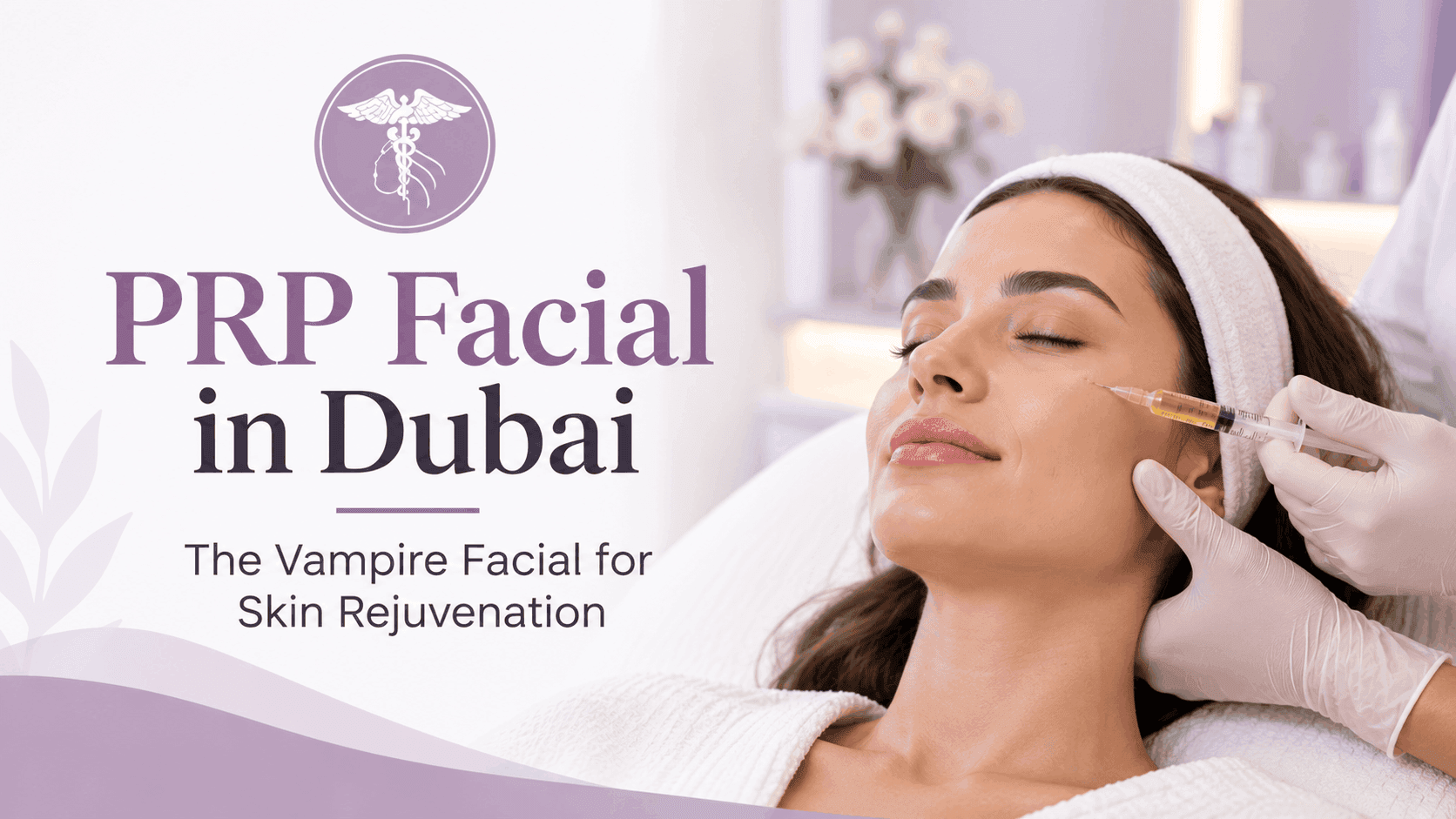
If you are looking for ways to improve skin texture, soften the appearance of fine lines or achieve a refreshed complexion, you may have come across the term vampire facial. This cosmetic procedure combines platelet-rich plasma (PRP), prepared from your own blood, with a skin treatment technique intended to support the skin's repair response.
A PRP facial in Dubai may appeal to people interested in a minimally invasive approach to skin rejuvenation. However, the results depend on the technique used, the condition being treated and individual skin characteristics. It is also important to understand that the evidence supporting PRP for cosmetic skin rejuvenation is still developing.
At Visage Polyclinic Dubai, a professional consultation can help determine whether PRP skin treatment is appropriate for your concerns and whether another skin-rejuvenation option may be more suitable.
A PRP facial uses platelet-rich plasma, a component prepared from a small sample of the patient's blood. Platelets contain growth factors involved in normal wound healing and tissue repair.
During treatment, a healthcare professional collects blood and processes it in a centrifuge to separate the platelet-rich plasma. The PRP is then applied or delivered to selected areas of the skin using a technique chosen for the patient's needs.
The procedure is often called a vampire facial in popular beauty terminology. However, this name does not describe one standardized medical procedure. Some treatments combine PRP with microneedling, while others involve injections or different methods of application.
The exact technique matters because the potential benefits, recovery period and risks can differ.
The vampire facial is a cosmetic treatment commonly associated with combining PRP and microneedling.
Microneedling uses fine needles to create controlled micro-injuries in the skin. These activate the skin's natural healing response. PRP may be added as part of the treatment, with the aim of supporting the repair process.
The term vampire facial is a marketing name rather than a guarantee of a particular result. Different providers may use different devices, PRP preparation methods and delivery techniques.
Before booking a vampire facial in Dubai, ask the clinic to explain exactly what the treatment includes, how the PRP is prepared, how it is applied and what evidence supports its use for your specific concern.
PRP facial treatment is being studied for several cosmetic skin concerns. Some studies report improvements in skin texture, fine lines or overall appearance, but the research remains variable and does not establish guaranteed outcomes.
PRP may be considered as part of a skin-rejuvenation plan for selected people concerned about fine lines and mild changes in skin texture.
However, it should not be presented as a substitute for surgery or as a treatment that reliably removes deep wrinkles.
Microneedling can stimulate a wound-healing response, and some patients may notice improvements in the appearance of uneven texture over time.
When PRP is combined with microneedling, the additional benefit attributable specifically to PRP is not yet clearly established across all treatment methods.
Some people seek a PRP facial because their skin looks tired or lacks smoothness. Treatment may support changes in texture for selected patients, but there is limited evidence to promise a consistent improvement in radiance or a particular “glow.”
Sun protection, suitable skincare and treatment of underlying skin conditions remain important.
Microneedling may improve the appearance of some depressed acne scars. PRP is sometimes added to these procedures, but the extent of any additional benefit remains uncertain.
Deep, narrow or tethered scars may require other approaches. Active acne should be assessed before treatment, as needling over inflamed lesions may increase irritation and complications.
For more information, read our guide to acne scar treatment in Dubai.
Some patients consider PRP as one part of a broader skin-rejuvenation plan. Whether it is suitable depends on the skin concern, medical history, risk factors and desired outcome.
A qualified professional should explain what the treatment can reasonably achieve and whether better-established alternatives are available.
Potential benefits depend on the technique and the individual's response.
Uses the patient's own blood: PRP is prepared from the patient's blood rather than donor plasma. This does not make the procedure risk-free.
Minimally invasive: A PRP facial does not require surgery, although microneedling or injections can cause temporary discomfort and visible irritation.
May improve selected skin concerns: Early research suggests possible improvements in some measures of skin quality, but the evidence is not strong enough to guarantee results.
Can be individualized: The treatment approach can be adapted to the skin concern, provided the technique is appropriate and delivered by a qualified professional.
May complement other treatments: A clinician may discuss PRP alongside other skin treatments when appropriate. Combining procedures should be based on clinical judgment rather than assuming that more treatments will produce better results.
A typical appointment may involve the following stages, although the exact process depends on whether PRP is combined with microneedling or delivered using another technique.
The clinician reviews your concerns, medical history, medications, skin sensitivity and previous cosmetic procedures.
They should also assess whether you have active acne, infection, a history of abnormal scarring or a tendency to develop pigmentation after inflammation.
A small blood sample is collected using appropriate clinical procedures.
The sample is processed in a centrifuge to separate the platelet-rich plasma from other blood components.
The final preparation can vary according to the equipment and protocol used.
Depending on the chosen technique, the PRP may be applied alongside microneedling or delivered through selected injection methods.
If microneedling is used, the clinician selects the appropriate device and settings based on your skin and treatment goals.
The clinician provides instructions on cleansing, moisturising, sun protection and when to restart active skincare products.
Because the skin barrier may be temporarily disrupted, following the aftercare instructions is important.
Recovery depends on the method used, treatment intensity and individual skin response.
The skin may appear red and feel warm, tight or sensitive. Mild swelling or pinpoint bleeding may occur when microneedling or injections are performed.
Redness, tenderness and mild swelling may persist. Some people experience dryness or temporary roughness as the skin recovers.
The duration varies, so allow enough time for your skin to settle before an important event.
Visible irritation generally improves before any potential collagen-related changes become apparent. If improvement occurs, it may develop gradually over several weeks.
There is no guaranteed recovery schedule or result. Your clinician should explain the expected downtime for the specific technique being used.
Your clinician's instructions should take priority, as aftercare differs according to the treatment method.
General considerations may include:
Do not apply makeup immediately after treatment unless your clinician confirms it is appropriate.
Contact a healthcare professional if you develop worsening pain, spreading redness, pus, fever, blistering or other signs of infection.
Results vary, and there is no reliable way to predict the degree of improvement for an individual patient.
Some studies report improvements in selected measures of skin quality after PRP-based procedures, but studies differ in how PRP is prepared and delivered. This makes it difficult to establish a universal treatment protocol or timeline.
If improvement occurs, it may develop over several weeks or months rather than immediately. The result can depend on:
A PRP facial should not be promoted as guaranteeing smoother skin, removing all fine lines or producing permanent rejuvenation.
PRP facial treatment can be performed with an acceptable safety profile when properly selected and carried out, but it is not risk-free.
Possible side effects include redness, swelling, tenderness, bruising, discomfort and temporary skin irritation. Procedures that involve microneedling or injections can also carry risks of infection, scarring and changes in pigmentation.
Sterile equipment, correct blood handling and appropriate clinical technique are essential.
A consultation is particularly important if you have a bleeding or platelet disorder, active skin infection, a history of abnormal scarring, impaired wound healing or a condition that affects your immune system. Tell the clinician about all medications and supplements you use.
Using your own blood does not eliminate the risks associated with needling, injections or infection.
PRP facial treatment is not appropriate for everyone.
You may need further assessment or an alternative treatment if you have:
The clinician should determine whether treatment is suitable and explain the benefits, limitations and risks before obtaining your informed consent.
These terms are related but do not mean the same thing.
PRP facial uses platelet-rich plasma, with the delivery method varying by procedure, and may involve topical application, injections, or combination procedures. Its main goal is to explore the potential benefits of PRP for selected skin concerns, although the evidence varies depending on PRP preparation and delivery technique.
Microneedling creates controlled micro-injuries using fine needles and a device with selected settings, aiming to improve concerns such as skin texture and some acne scars. Evidence and suitability depend on the indication and technique.
Recovery after a PRP facial depends on the delivery method and any combined procedure, while microneedling may cause redness and sensitivity, with downtime varying by treatment depth.
Neither option is universally better. The appropriate treatment depends on your skin concern, medical history and what the available evidence supports.
Read more about microneedling in Dubai to compare the procedure and its recovery requirements.
The cost of a PRP facial in Dubai varies according to the treatment method and clinic.
Factors that may affect the price include:
There is no single price that applies to every patient. Request a clear quotation and confirm what each session includes before proceeding.
A higher price does not automatically indicate better results. Professional qualifications, sterile procedures, transparent information and appropriate treatment planning should also influence your decision.
A PRP facial may be worth considering if you understand its limitations and have a specific concern that could reasonably respond to the procedure.
It may be less suitable if you expect dramatic or guaranteed changes, want immediate results or have a condition that requires a different treatment.
Before booking, consider these questions:
What exact technique will be used?
What evidence supports its use for my skin concern?
Who will perform the procedure?
What risks apply to my skin type and medical history?
How many sessions might be recommended?
What alternatives are available?
What outcomes are realistic, and how will they be measured?
An honest consultation should explain when PRP is appropriate and when another option may be more effective.
Choosing a provider for PRP skin treatment involves more than comparing promotional packages.
At Visage Polyclinic Dubai, patients can discuss their skin concerns and explore suitable treatment options through an individualized consultation.
Before proceeding, ask about the exact procedure offered, how PRP is prepared and delivered, the professional performing the treatment, expected recovery, possible complications and realistic outcomes.
You can also explore the clinic's skin rejuvenation treatments in Dubai to learn about other available approaches.
If you are considering a vampire facial to improve selected skin concerns, start by discussing your goals and medical history with a qualified professional.
A PRP facial in Dubai may be an option for some patients, but the benefits are not guaranteed and the best treatment depends on the condition being addressed.
Contact Visage Polyclinic Dubai to discuss your skin concerns, understand the available options and determine whether PRP treatment is appropriate for you.
A vampire facial is a popular name for a cosmetic procedure that uses platelet-rich plasma, often in combination with microneedling. The exact technique varies between providers.
It may improve selected skin-quality measures in some patients, but results vary and the evidence remains limited. A clinician can advise whether it is suitable for your concern.
Redness and sensitivity may last several days, depending on the method and treatment intensity. More intensive procedures may require longer recovery.
There is no universal schedule. The number and spacing of sessions depend on the treatment method, skin concern and individual response.
You may experience discomfort from microneedling or injections. A topical numbing product may be used when appropriate, depending on the procedure.
PRP may be used alongside microneedling for selected acne scars, but the additional benefit from PRP is not fully established. Scar type and severity determine the most appropriate approach.
Suitability depends on the technique, skin condition and risk of post-inflammatory pigmentation. A qualified professional should assess your skin and explain the potential risks.
No. PRP facial treatment does not guarantee permanent results. Any improvement may vary in degree and duration, and maintenance may be discussed where appropriate.
You may need to avoid makeup immediately after treatment while the skin recovers. Follow the specific advice provided by your clinician.
This article is for informational purposes only and does not constitute medical advice. Consult a qualified practitioner for personalised guidance.
The price depends on the procedure, treatment area, PRP preparation method and number of sessions. Request an individualized quotation during consultation.